
Concrete Driveway Cost in Canberra: Your 2026 Price Guide
Are you planning a new driveway and want a real number before the quotes start rolling in? In Canberra in 2026, a concrete driveway typically costs $80 to $280 per square metre, or roughly $4,000 to $28,000 (excl GST) for a finished job, depending on the finish you choose, the size of the area, and your site.
Below we break down for you exactly where those numbers come from so you can budget with confidence and spot an over-priced quote when you see one.
How much does a concrete driveway cost in Canberra?
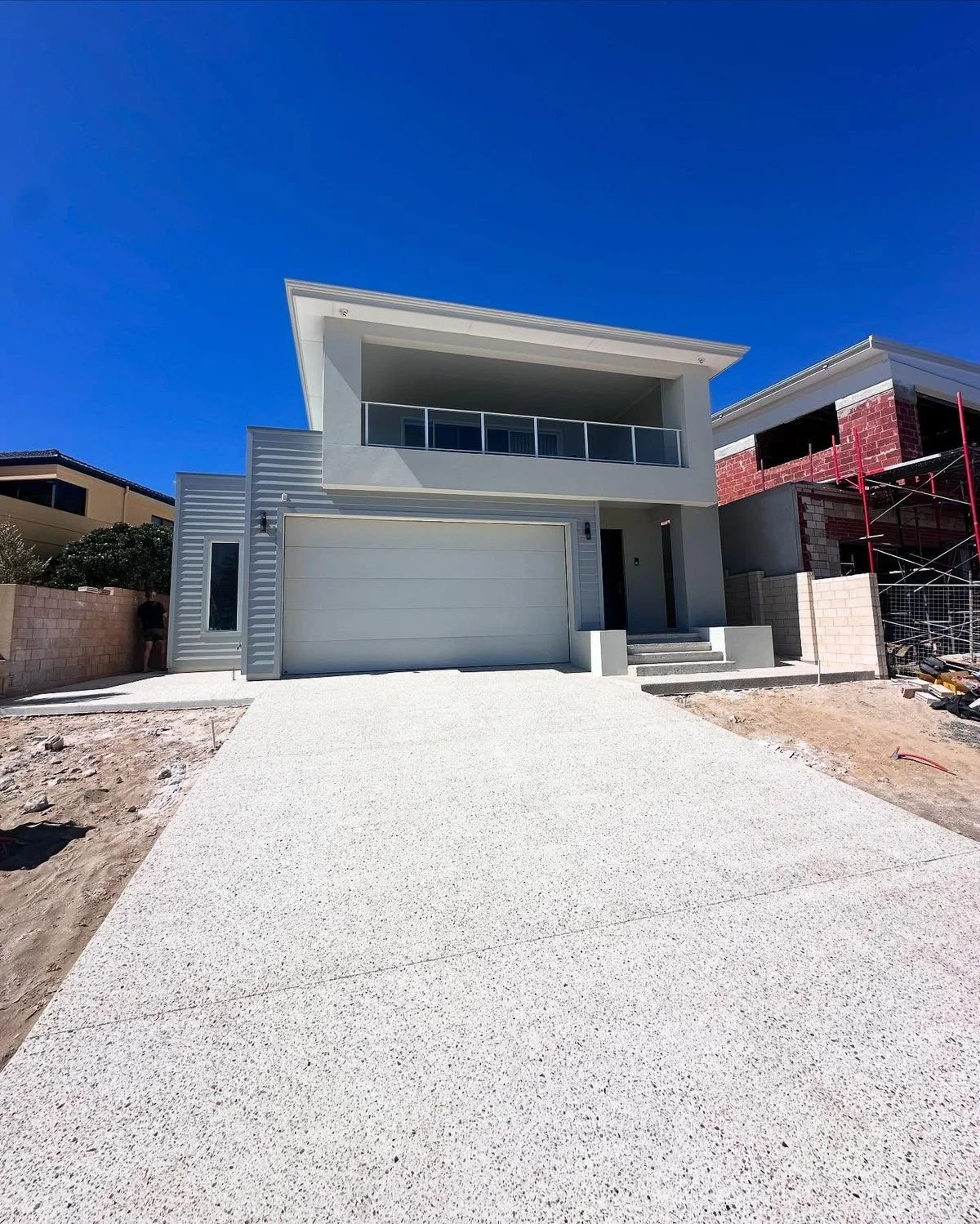
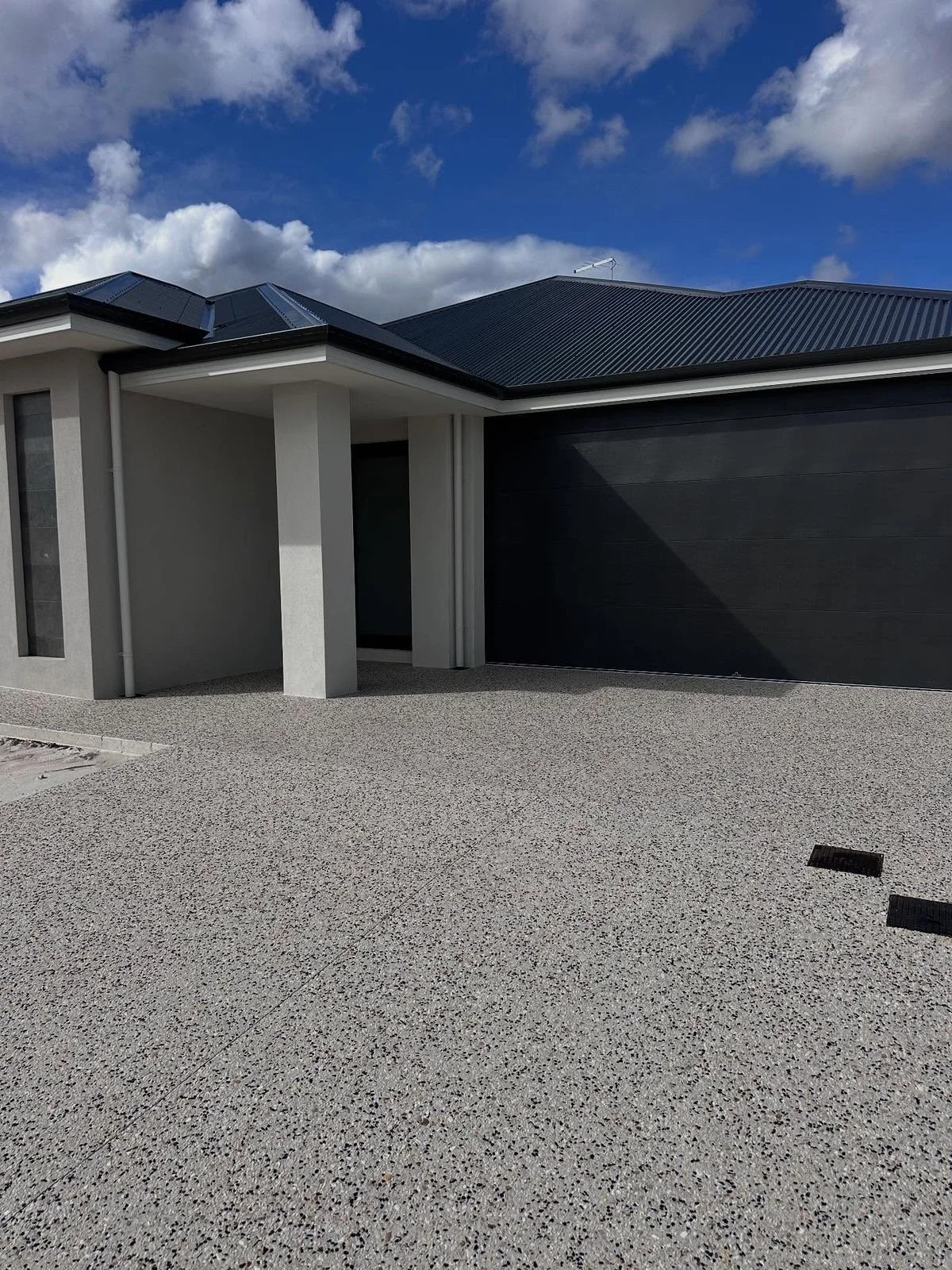
In 2026, a standard plain (broom-finish) concrete driveway in Canberra costs about $80 to $150 per square metre supplied and laid. Decorative finishes cost more: exposed aggregate runs $150 to $220 per square metre, and coloured or stamped concrete sits between $180 and $280.
| Finish | Cost per m² (2026) | Best for |
|---|---|---|
| Plain / broom finish | $80 – $150 | Budget-conscious jobs, side access, sheds |
| Exposed aggregate | $150 – $220 | Front driveways, kerb appeal, grip in the wet |
| Coloured concrete | $180 – $250 | Matching render or roof tones |
*Prices are supplied-and-laid estimates for a straightforward Canberra site and include the concrete, standard reinforcement, labour and finishing. They exclude site prep, excavation of difficult ground, removal of an old driveway, and the TCCS/QPRC vehicle-crossing works covered further down in this post.
Concrete driveway cost by size
Square-metre rates are useful, but most people think in whole driveways. Here is what typical Canberra jobs cost in 2026 once everything is added together.
| Driveway | Approx. area | Typical total (2026) |
|---|---|---|
| Single | 25 – 40 m² | $4,000 – $11,000 |
| Double | 40 – 70 m² | $6,500 – $18,000 |
| Long / rural block | 60 – 120 m² | $9,000 – $28,000 |
The wide breadth of prices seen in each row is almost entirely finish and site condition. A single plain driveway on flat, clear ground sits at the bottom of the range; a single exposed-aggregate driveway that needs the old slab removed and a new crossing poured sits near the top.
What’s included in a concrete driveway price?
A fair Canberra quote should spell out what you’re paying for. A properly built driveway usually includes:
Site preparatio: excavation, levelling and a compacted sub-base (usually 75mm of road base).
Formwork: the timber or steel edging that holds the pour to shape.
Reinforcement: steel mesh to control cracking.
The concrete itself.
Finishing: broom, exposed-aggregate wash, colour, plus curing.
Jointing: expansion and control joints cut to the right spacing so the slab cracks where you want it to.
9 factors that change your driveway cost in Canberra
Two driveways of the same size can differ by thousands. These are the variables that determine the price you pay:
Finish. The single biggest factor; exposed aggregate can add 50–100% over a plain broom finish.
Size and shape. Bigger is cheaper per m², but curves, tight corners and multiple pours push labour up.
Removing the old driveway. Breaking out and carting away an existing slab typically adds $1,500–$4,000.
Site access. If a truck or pump can’t get close, concrete has to be barrowed or pumped in which means more labour, and more cost.
Ground and slope. Reactive clay, fill, or a sloping Canberra block needs extra excavation, base or retaining.
Thickness and reinforcement. A driveway that will carry a caravan, boat or trade vehicle needs a thicker slab and heavier steel.
Drainage. Adding a grate, strip drain or ag-line to manage run-off adds cost but protects the slab.
The vehicle crossing. If the kerb crossing (the ‘layback’) needs replacing, that’s a separate QPRC/TCCS-approved job (see below).
Season and demand. Spring and early summer book out fast in the ACT; lead times and prices firm up then.
Canberra vehicle-crossing (TCCS) approval
In the ACT, the section of driveway between your property boundary and the road, the vehicle crossing or ‘layback’, sits on public land and is regulated by Transport Canberra and City Services (TCCS). If you’re building a new crossing or widening one, you need approval before anyone pours.
Key points worth budgeting and planning for:
Domestic crossings must be a minimum 100mm-thick Grade 32 slab on 75mm of compacted sub-base.
Crossings are generally 3m minimum and 5.5m maximum in width.
Maximum verge gradient is 17% upward and 12% downward.
Polished and tiled finishes are not permitted on the crossing.
Allow at least 15 working days for a driveway layout review, and TCCS inspects the prepared base before the pour.
A good local contractor handles this paperwork for you, always confirm it’s included in the quote so approval delays don’t stall your job.
Building in Queanbeyan or the QPRC region? Approval works differently
If your property sits in NSW rather than the ACT, the crossing approval runs through a different system and it’s worth understanding before you plan your job.
In NSW, a new or altered vehicle crossing needs a Section 138 approval under the Roads Act 1993, issued by QPRC as the roads authority. This is separate from any Development Application (DA) or Complying Development Certificate (CDC): your DA covers works on your side of the boundary, but the crossing on the public road reserve needs its own approval.
The key points for QPRC jobs:
Applications are lodged through the NSW Planning Portal.
QPRC’s vehicular access design follows standards based on the ACT (TAMS) and former Palerang Council drawings.
The crossing on the road reserve must be full-width plain concrete with a broom or wood-float finish; decorative finishes like exposed aggregate, coloured, stamped or pebblecrete are generally not approved on the crossing itself (you can still use them on your own driveway behind the boundary).
A formwork inspection is required before the pour and a final inspection after, each booked at least 3 working days ahead.
Allow roughly 4 weeks for approval. Timing also depends on your pathway. For a DA you apply after it’s approved; for a CDC you apply before lodging.
The crossing from the gutter to your property boundary is the owner’s responsibility to build and maintain.
Here’s how the two approval systems compare at a glance:
| ACT — Canberra (TCCS) | NSW — QPRC region | |
|---|---|---|
| Approval | TCCS driveway / crossing approval | Section 138 (Roads Act 1993) |
| Lodged via | Access Canberra | NSW Planning Portal |
| Crossing finish | Plain concrete (no polished / tiled) | Full-width plain concrete (broom / wood-float) |
| Inspections | Base inspected before pour | Formwork before pour + final |
| Typical timing | ~15 working days | ~4 weeks |
How to get an accurate driveway quote
Guides like this get you a rough budget; only a site visit gets you an actual price. To compare quotes fairly, give every contractor the same brief: the finish you want, the approximate area, whether an old driveway needs removing, and whether a new vehicle crossing is involved. Ask each one to itemise the sub-base, slab thickness, reinforcement and jointing so you’re comparing like for like.
Frequently asked questions
Is exposed aggregate worth the extra cost in Canberra?
For a front driveway, most homeowners think so. It adds noticeable kerb appeal and gives better grip on frosty Canberra mornings. For a concealed driveway or a budget-conscious install, plain concrete is the smarter spend. See examples of some recent concrete driveways we have installed here.
How long does a concrete driveway take to install?
A typical single or double driveway takes two to four days of on-site work, plus TCCS/QPRC approval time upfront if a new crossing is needed. You can walk on the slab after 24–48 hours but should keep vehicles off for at least 7 days while it cures.
How long will a concrete driveway last?
Properly built and jointed, a Canberra concrete driveway lasts 30–40 years or more. Correct slab thickness, good drainage and control joints are what separate a driveway that lasts from one that cracks early.
Do I need council approval for a driveway in the ACT?
You need TCCS approval for the vehicle crossing on the public verge. The driveway on your own property generally doesn’t need separate approval, but the crossing does, and it must meet ACT standards.
Why are the quotes I’m getting so different?
Usually finish and specification. One quote might assume a thin plain slab with light mesh; another a thicker, heavily reinforced exposed-aggregate driveway with a new crossing. Get everything itemised and the gap usually explains itself.