
Exposed Aggregate vs Plain Concrete: Which Is Right for Your Home?
Both options are poured concrete, both last for decades, so the choice really comes down to looks, grip and budget. In short: plain concrete is the affordable, low-maintenance all-rounder, while exposed aggregate costs more but delivers standout kerb appeal and better grip in the wet. Here’s how they compare on every factor that matters, so you can pick the right finish for your home the first time.
At a Glance
| Factor | Plain concrete | Exposed aggregate |
|---|---|---|
| Cost per m² (Canberra 2026) | $80 – $150 | $150 – $220 |
| Appearance | Clean, uniform, minimal | Textured, natural stone, premium |
| Grip in the wet | Good | Excellent |
| Durability | 30+ years | 30+ years |
| Maintenance | Low — easy to clean | Moderate — reseal, texture traps grime |
| Kerb appeal / resale | Neutral | Strong |
| Best for | Budget, side access, sheds | Front driveways, entertaining areas |
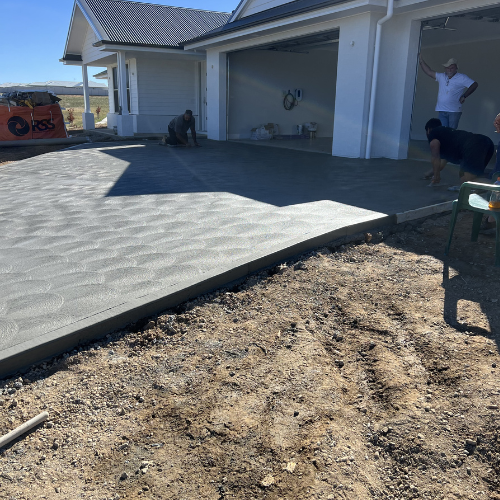
What is plain concrete?
Plain concrete is a standard poured slab finished with a broom or trowel to give a smooth, even surface. It’s the most common and most economical driveway finish, and its clean, uniform look suits modern and minimalist homes. What you gain in affordability and easy cleaning, you trade in visual interest as it’s a practical surface rather than a feature.
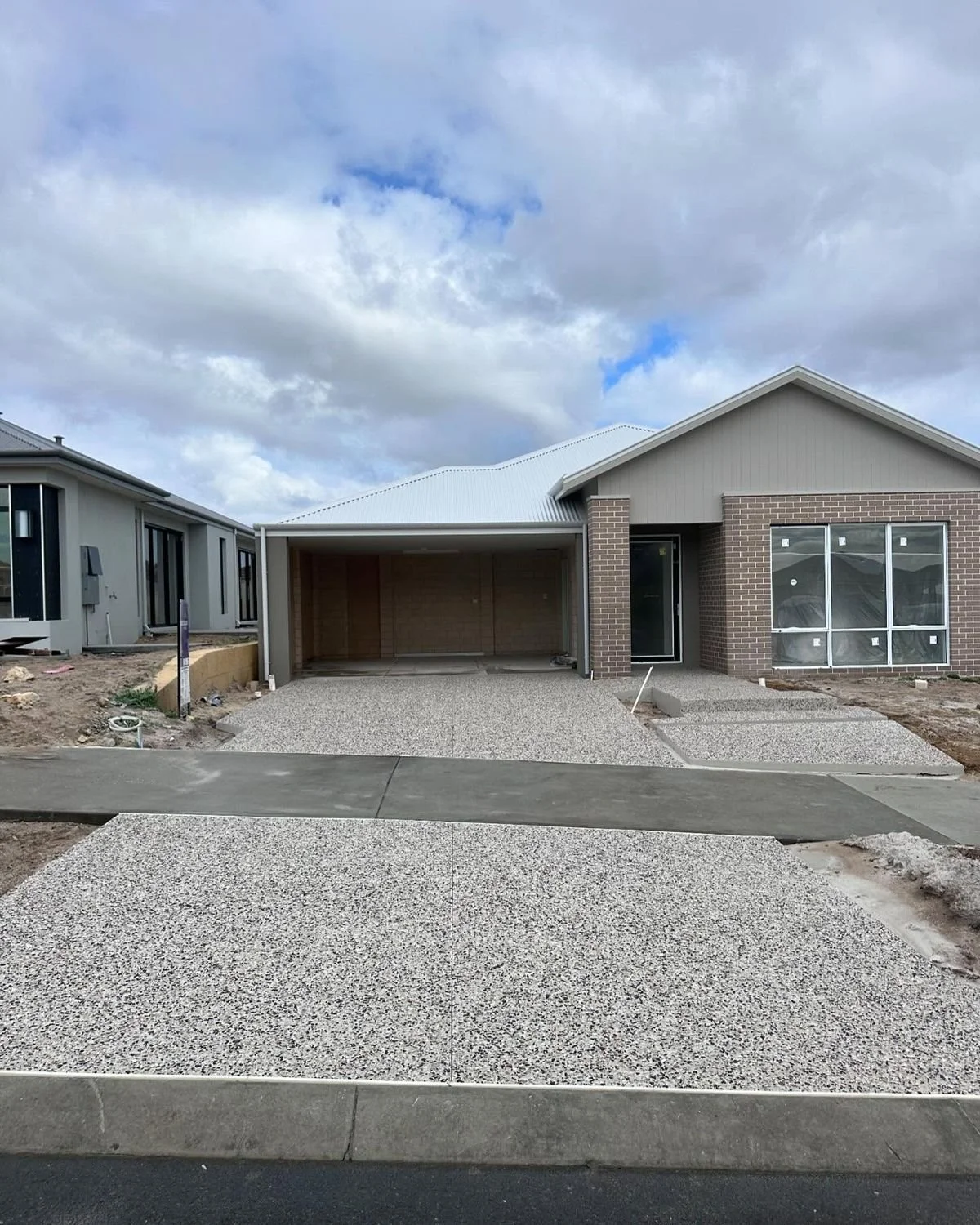
What is exposed aggregate?
Exposed aggregate is concrete with the top layer of cement ‘washed’ back while still curing to reveal the natural stones (the aggregate) within the mix. The result is a textured, speckled surface with real depth and colour variation. You can tailor the look by choosing different stones, from soft river pebbles to crushed granite, which is why it’s the go-to for homeowners who want their driveway to be a design feature of their home.
The Cost
This is usually the deciding factor for many of our clients. In Canberra in 2026, plain concrete runs about $80 to $150 per square metre, while exposed aggregate sits between $150 and $220. The extra cost of exposed aggregate covers the decorative stone and the additional finishing labour to wash and expose it. On a typical single driveway, that difference is often a few thousand dollars. Whether it’s worth it depends on how visible the driveway is and how long you plan to stay in the home. For a full breakdown by size and finish, see our Canberra concrete driveway cost guide.
Appearance & kerb appeal
There’s no contest here (in our opinion), exposed aggregate wins on looks. The stone texture adds warmth and character, hides minor marks and dirt better than a flat grey slab, and can be colour-matched to your render, brick or roof. Plain concrete is understated and tidy, which is exactly right for some homes, but it rarely lifts a facade the way aggregate does. If your driveway is the first thing visitors see, aggregate earns its keep.
Grip & safety
Canberra’s frosty mornings and wet winters make surface grip more than a nicety. The textured surface of exposed aggregate provides noticeably better traction underfoot and under tyre than a smooth plain slab, which matters on sloped blocks and shaded driveways that stay damp. Plain concrete is perfectly safe with a broom finish, but a smooth-trowelled plain surface can get slippery when wet (especially important to consider if elderly people use the driveway).
Durability & lifespan
On raw longevity the two are evenly matched. Both are structural concrete and, when poured to the right thickness with proper reinforcement and jointing, both comfortably last 30 years or more. Neither finish is inherently stronger, the durability comes down to the slab underneath and the prep, not the surface on top. The real difference is how they age cosmetically: aggregate hides wear and staining well, while marks show more readily on plain concrete.
Maintenance
Plain concrete is the lower-maintenance option. Its smooth surface hoses down easily and there’s little for grime to cling to. Exposed aggregate’s texture is its strength and its inconvenience, the same uneven surface that gives grip also traps dirt and debris, so it benefits from occasional pressure-washing and resealing every few years to keep the stone crisp and protected. Neither is high-effort, but if you want ‘set and forget’, plain concrete wins.
Resale value
A driveway is one of the first things a buyer sees, and presentation counts. Exposed aggregate’s premium finish can lift street appeal and support a stronger first impression at sale, which is useful if you’re renovating to sell or planning to move within a few years. Plain concrete keeps a home looking neat and cared-for without making a statement. If resale is part of your thinking, aggregate is the safer bet for a front driveway.
Which is right for your home?
Choose plain concrete if…
You’re watching the budget and want the most durable surface per dollar.
The area is out of sight — side access, a shed slab or rear parking.
You prefer a clean, modern, minimalist look and low upkeep.
Choose exposed aggregate if…
It’s your front driveway and kerb appeal matters.
You want better grip on a sloped, shaded or frost-prone Canberra block.
You’re thinking about resale, or you simply want the driveway to look like a feature.
Still unsure? A practical middle path many Canberra homeowners take is exposed aggregate for the visible front apron and plain concrete for hidden side or rear sections, the best of both budgets.
Frequently asked questions
Is exposed aggregate more expensive than plain concrete?
Yes. In Canberra, exposed aggregate typically costs $150–$220 per m² versus $80–$150 for plain concrete. The extra covers the decorative stone and the additional wash-and-expose finishing labour.
Is exposed aggregate slippery?
No, it’s the opposite. The exposed stone gives a textured surface with better grip than smooth concrete, which is why it’s popular for driveways, pool surrounds and sloped blocks.
Does exposed aggregate need sealing?
It’s recommended. Resealing every few years protects the surface, keeps the stone looking sharp and makes it easier to clean. Plain concrete can also be sealed but is more forgiving if you don’t.
Which lasts longer, plain or exposed aggregate?
Both last 30+ years when properly built. The lifespan depends on the slab thickness, reinforcement and jointing underneath, not the surface finish. Aggregate tends to hide age and staining better over time.
Can I mix both finishes?
Absolutely. Using exposed aggregate on the visible front section and plain concrete elsewhere is a common way to get the premium look where it counts while keeping costs down.
Not sure which finish suits your place?
We’ll walk your site, talk through the look you’re after and give you a free, itemised quote and driveway assessment report for both options so you can compare.