
If you're building on a rural block in the Queanbeyan-Palerang region, there's a good chance your approval comes with a condition about your driveway entrance. It's one of the last items on the list, and one of the most common reasons final sign-off gets held up.
This guide explains what QPRC requires, how the approval process works and what to plan for, so your entrance is done once and done properly.
Why council cares about your entrance
The section of driveway between the edge of the road and your property boundary isn't on your land. It sits in the road reserve, which council manages. Every vehicle that enters or leaves your property crosses it, and a poorly built entrance can drag gravel onto the road, damage the road edge and send water where it shouldn't go.
That's why QPRC sets a standard for how rural entrances are built and requires approval before any work starts.
When you need approval
You'll need QPRC approval to build a rural entrance if it's:
For a new development, usually as a condition of your DA
Replacing an existing entrance
A second entrance to your property
If your DA conditions mention a rural entrance, vehicular access or a Section 138 approval, this applies to you.
What standard the entrance has to meet
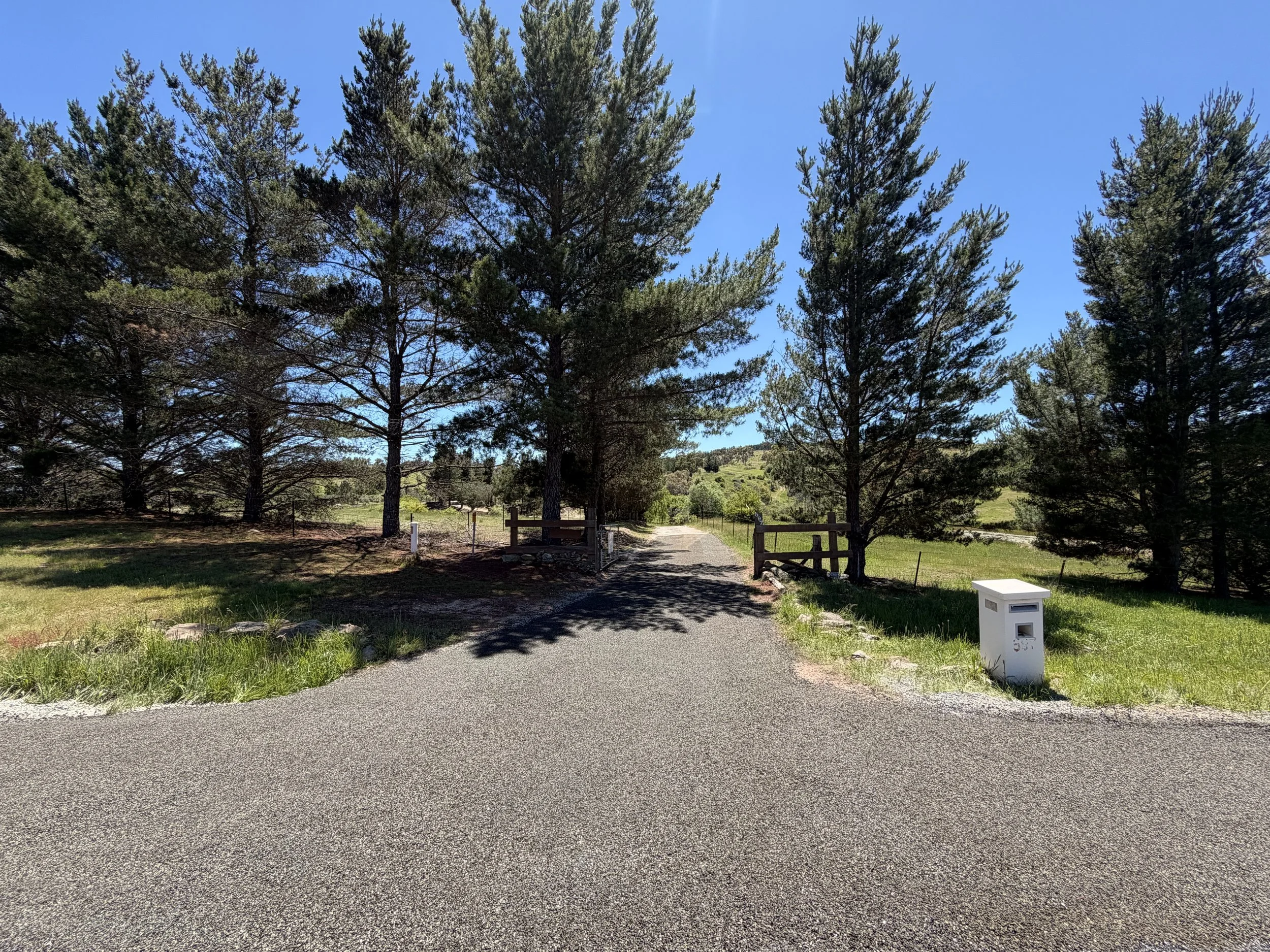
QPRC rural entrances must be built to the QPRC D13 Vehicular Access Design Specification and its standard drawings. Which drawing applies depends on whether the road out front is sealed or unsealed. Where your entrance meets a sealed road, expect council to require a sealed finish from the road edge to your boundary, along with the right width, shape and drainage.
A two-coat spray seal is the most common and cost-effective way to meet a sealed-entrance requirement on a rural property.
The approval process, step by step
Check your conditions. Read your DA conditions or council correspondence for the entrance requirements, including any notes on culverts, pipes or the road shoulder.
Choose a prequalified contractor. QPRC requires the construction contractor to be a prequalified rural entrance contractor with council.
Lodge the Rural Entrance Application. The form covers your property details, the type of entrance and a plan of the proposed design and location. It can be lodged in person at council's Queanbeyan, Bungendore or Braidwood offices, by post or by email.
Pay the fees and bond. Council charges a fee for assessing the application and inspecting before works, and a security bond applies. Amounts are set in QPRC's Fees and Charges.
Traffic management. Because the work is beside a live road, it needs a traffic management plan and traffic control on the day to keep road users and the crew safe.
Pre-seal inspection. Council requires a pre-seal inspection, booked at least 24 hours before bitumen sealing, so the base can be checked before it's covered.
Construction and sign-off. The entrance is sealed to the D13 standard, and once council is satisfied, it can be ticked off your conditions.
Traffic management: the part most people don't expect
Many owners are surprised that a small section of driveway needs a traffic management plan. Any work on or beside a public road changes how traffic moves past the site, even briefly. A traffic management plan sets out the signs, speed limits and controls needed, and accredited traffic controllers manage the road on the day.
It's also where costs and delays can creep in if it's organised separately from the sealing contractor.
Common hold-ups to avoid
Starting work before the Section 138 certificate is issued. Work in the road reserve without approval may need to be removed or redone.
Missing the pre-seal inspection. Once the seal is down, council can't inspect the base beneath it.
Overlooking drainage. Entrances that cross a table drain may need a pipe or culvert, which should be planned from the start.
Leaving it too late. With applications, inspections and traffic management to organise, allow time before your sign-off date
How we help
We build rural entrances and driveways across the QPRC region, including Bungendore, Wamboin, Googong, Burra and Braidwood. We handle the site prep, two-coat spray seal, traffic management plan and traffic control on the day, so you deal with one contractor from start to finish. If you'd like the rest of your driveway sealed at the same time, we can quote that too.
Frequently asked questions
Do I need council approval to seal my rural driveway entrance in QPRC?
Yes. A rural entrance sits in the road reserve, so QPRC requires an application and a Section 138 certificate before any work starts.
Does my entrance have to be sealed?
It depends on your road and your conditions. QPRC's standard drawings differ for sealed and unsealed roads. Where your property fronts a sealed road, a sealed entrance is usually required.
Do I need a traffic management plan?
Work beside a public road needs traffic management to keep road users and workers safe. We prepare the plan and provide traffic control on the day as part of the job.